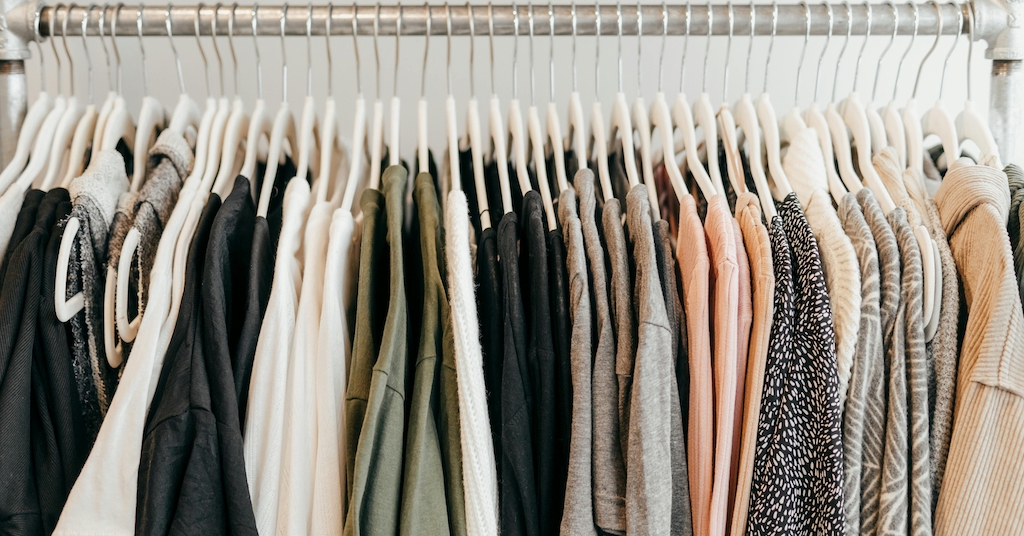
Every year in the European Union, millions of items of clothing and footwear are produced, transported, stored… and never worn. According to estimates, 4-9% of all textiles placed on the EU market are destroyed as unsold products, generating around 5.6 million tonnes of CO₂ emissions annually. These emissions are released without delivering any social or economic value to consumers.
For a long time, this issue remained largely invisible in climate policy debates. Textile waste was treated primarily as a consumer or waste-management problem, not a climate one. That is now changing.
With the adoption of new measures under the Ecodesign for Sustainable Products Regulation (ESPR), the EU has taken a clear step towards addressing overproduction as a structural source of emissions.
Why unsold textiles matter for climate policy
The climate impact of textiles does not begin when clothes are worn: it begins much earlier. Emissions are generated during raw material extraction, manufacturing, dyeing, transport and storage. When unsold products are destroyed, the entire carbon footprint of their production becomes pure waste.
This makes overproduction fundamentally different from other forms of consumption-related emissions. In this case, emissions occur without any corresponding use, raising questions not just about efficiency, but about how climate responsibility is distributed across supply chains.
While the Fit for 55 package is often associated with energy, transport and carbon pricing, its underlying logic is broader: cut emissions where they are structurally unnecessary. From this perspective, unsold textiles represent a clear and avoidable source of emissions.
What the new EU rules change
Under the ESPR, the destruction of unsold clothing and footwear will be prohibited in the EU, with clearly defined exceptions where destruction may still be allowed. At the same time, companies will be required to disclose information using a standardised reporting format, making the scale of the problem more transparent.
Rather than focusing solely on end-of-life waste, the regulation shifts attention upstream. Businesses are encouraged to:
- improve stock management and demand forecasting,
- rethink return policies,
- explore alternatives such as resale, remanufacturing, donation or reuse.
The message is clear: preventing waste is preferable to managing it.
Beyond energy: how this aligns with Fit for 55
Although the ESPR is not formally part of the Fit for 55 legislative package, it supports the same climate objectives. Reducing emissions from overproduction contributes to the EU’s 2030 emissions-reduction target by tackling embedded carbon in products before they ever reach consumers.
This reflects a broader evolution in EU climate policy. The focus is gradually expanding from energy systems to material use, product lifecycles and consumption patterns. Climate neutrality cannot be achieved by changing energy sources alone if production volumes continue to rise unchecked.
A systemic shift, not a symbolic ban
The prohibition of destroying unsold textiles is often presented as a symbolic move. In reality, it signals a deeper shift in how climate responsibility is framed. Instead of treating overproduction as a business inefficiency, EU policy increasingly recognises it as a climate risk.
Whether this approach delivers real emissions reductions will depend on enforcement, data quality and how businesses adapt. But the direction is clear: climate policy is no longer limited to smokestacks and power plants. It is beginning to question why emissions happen in the first place.
Climate policy isn’t just about energy anymore
The destruction of unsold clothing exposes a blind spot in traditional climate policy thinking. Emissions generated without use challenge the assumption that climate impacts are an unavoidable consequence of meeting consumer demand.
By addressing overproduction, the EU is expanding the scope of climate action beyond energy and transport. In doing so, it reinforces a key lesson of the Fit for 55 agenda: cutting emissions is not only about cleaner technologies, but also about smarter systems.
References
1. European Commission: Ecodesign for Sustainable Products Regulation
2. European Parliament: Textiles and the environment
3. European Environment Agency (EEA): Textiles and the environment in a circular economy