

In the first part of this series, we explored why hydrogen is attracting growing attention as a decarbonization tool. However, turning that promise into reality requires overcoming significant economic, technical, and political obstacles.
The challenges behind the hype
Despite its potential, the hydrogen economy faces substantial obstacles.
Cost
Perhaps the most significant challenge is economics.
Electrolysis requires large amounts of electricity. Depending on electricity prices, green hydrogen can cost two to five times more than conventional hydrogen production methods. Even as renewable energy costs decline, hydrogen production remains capital intensive. ACER
Infrastructure
Hydrogen requires dedicated infrastructure:
- Electrolyzers
- Pipelines
- Compression systems
- Storage facilities
- Refueling stations
Many existing natural gas systems require significant modifications before they can transport hydrogen safely and efficiently. Infrastructure deployment therefore represents a major investment challenge. Power to hydrogen
Efficiency losses
Hydrogen is often described as an energy carrier rather than an energy source.
The conversion process typically follows this pathway: Electricity – Hydrogen – Storage/Transport – End use
Each step incurs energy losses. As a result, direct electrification is generally more efficient whenever technically feasible. Many experts therefore argue that hydrogen should be reserved for applications where electrification is impractical. IEA
Are hydrogen projects delivering?
Recent data present a mixed picture.
According to the IEA, announced low-emission hydrogen production projects have experienced significant delays and cancellations. By 2025, only a small percentage of announced projects had reached final investment decisions, and planned global production capacity for 2030 had been revised downward compared with earlier forecasts. IEA
Similarly, ACER’s 2025 European Hydrogen Markets report concluded that the European hydrogen market remains significantly behind the EU’s original 2030 ambitions. Several major projects have been postponed or scaled back due to economic uncertainty and weaker-than-expected demand. IEU
These developments have led some analysts to describe the current period as a “hydrogen correction” rather than a hydrogen boom.
However, slowing growth does not necessarily imply failure. Historically, many transformative technologies, including renewable energy itself experienced multiple cycles of overinvestment and retrenchment before reaching commercial maturity. LinkedIN
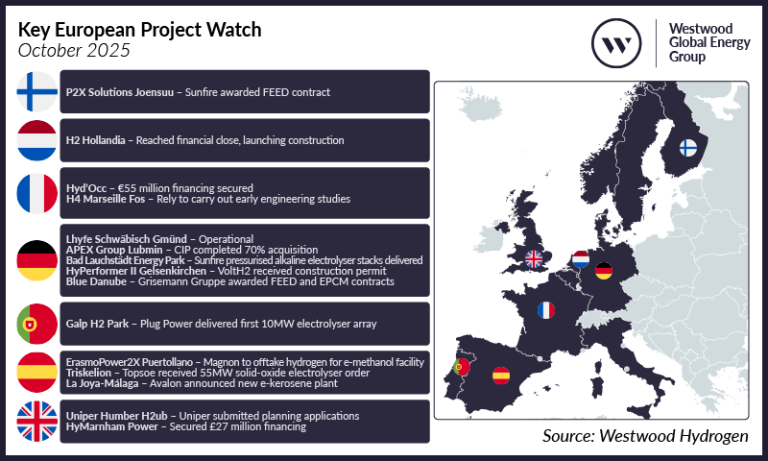
The European perspective
Europe remains one of the world’s most ambitious hydrogen markets.This ambition is closely linked to the European Union’s Fit for 55 package, which introduced a series of legislative measures designed to support the bloc’s 2030 climate targets. Through revisions to renewable energy, emissions trading, and alternative fuels legislation, the framework has created a stronger policy foundation for renewable and low-carbon hydrogen deployment. As a result, many hydrogen investments in Europe are being shaped not only by market conditions but also by evolving regulatory requirements aimed at reducing industrial and transport emissions. European Council
The European Union views hydrogen as a strategic tool for achieving climate neutrality while maintaining industrial competitiveness. The Clean Industrial Deal and broader Fit for 55 framework continue to position renewable and low-carbon hydrogen as important components of future industrial policy. ScienceDirect
The EU has also introduced:
- Renewable Fuels of Non-Biological Origin (RFNBO) regulations
- Hydrogen Bank funding mechanisms
- Cross-border hydrogen infrastructure initiatives
- Industrial decarbonization incentives
These policies aim to create long-term market certainty and stimulate investment. EHI
Conclusion: hype or necessity?
Current evidence suggests that hydrogen is neither a silver bullet nor a failed concept.
The industry’s challenges are real: high costs, infrastructure requirements, efficiency losses, and project delays continue to limit large-scale deployment. At the same time, there is growing consensus among policymakers, researchers, and industry stakeholders that certain sectors cannot achieve deep decarbonization without some form of low-carbon hydrogen.
The most likely outcome is a more targeted hydrogen economy than many early forecasts envisioned. Rather than powering every vehicle and heating every building, hydrogen is expected to serve as a strategic decarbonization tool for heavy industry, long-distance transportation, chemical production, and energy storage.
In this sense, hydrogen may not fulfill all of the promises made during its most enthusiastic promotional phase. Yet it is increasingly difficult to envision a net-zero energy system that functions entirely without it.