
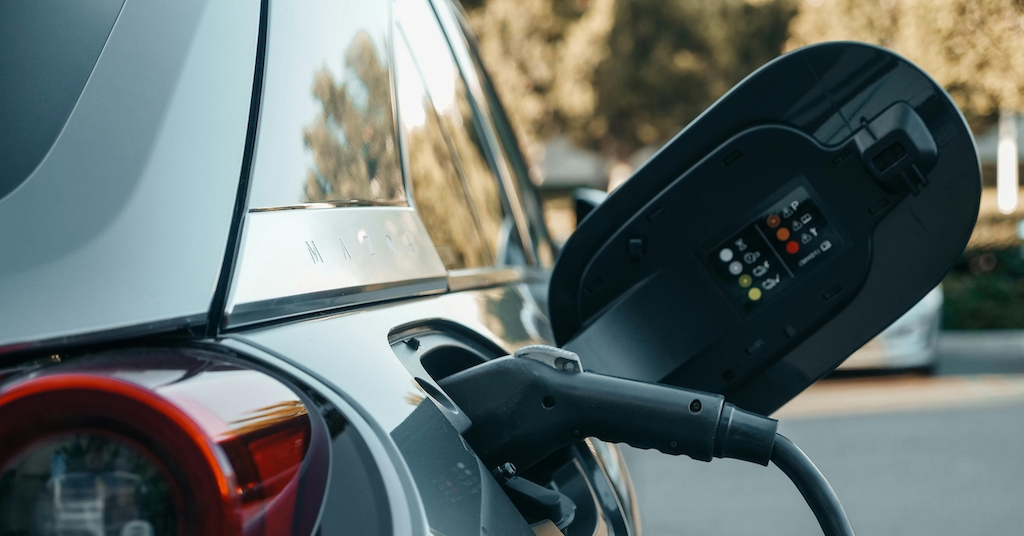
Electric vehicles are becoming an increasingly visible part of everyday life across Europe. More models are entering the market, governments continue to support cleaner mobility, and the transition away from combustion engines remains a central part of Fit for 55. But while electric mobility is accelerating, another question is becoming harder to ignore: can Europe’s charging infrastructure keep pace?
The EV transition is moving fast
The European electric vehicle market has grown rapidly over the past few years. According to European Automobile Manufacturers’ Association, battery-electric vehicles accounted for around 15% of all new car registrations in the EU in 2023, with even higher shares in several member states (Source: ACEA).
At the same time, the EU continues pushing toward lower transport emissions through:
- stricter CO₂ targets
- expanding zero-emission mobility
- investments in alternative fuels infrastructure
Transport remains one of the EU’s largest sources of greenhouse gas emissions, making electrification a key part of climate strategy.
The infrastructure gap
While EV adoption is growing, charging infrastructure development is not always progressing at the same speed. One of the biggest challenges is uneven distribution. According to the European Court of Auditors, charging stations remain heavily concentrated in a small number of Western European countries, while many regions still lack sufficient coverage (Source: ECA).
This creates a fragmented landscape:
- urban areas are generally better covered
- rural regions often lag behind
- cross-border consistency remains uneven
For many drivers, “range anxiety” is increasingly becoming “charging anxiety.”
Public chargers are only part of the picture
The debate around EV infrastructure often focuses on public charging stations, but most charging actually happens elsewhere. According to the International Energy Agency, a significant share of EV owners charge at home or at work (Source: IEA Global EV Outlook). This means the challenge is broader than simply installing more roadside chargers.
Europe also needs:
- stronger local electricity grids
- residential charging solutions
- workplace infrastructure
- smarter energy management systems
In other words, the EV transition is deeply connected to the wider energy transition.
The EU’s response: AFIR
To address these gaps, the EU introduced the Alternative Fuels Infrastructure Regulation (AFIR). The regulation sets mandatory targets for charging infrastructure deployment across member states, including:
- minimum charging coverage along major transport corridors
- faster charging availability
- improved interoperability and payment systems
The goal is to make charging more accessible, reliable, and consistent across Europe. According to the European Commission, AFIR is intended to support both consumer confidence and the broader rollout of clean mobility.
Europe’s charging race: where are we now?
Europe’s EV infrastructure is growing rapidly, but demand is growing even faster. According to the European Automobile Manufacturers’ Association, the EU had around 632,000 public charging pointsat the end of 2023. However, the European Commission estimates that at least 3.5 million chargers will be needed by 2030 to support the transition to electric mobility.
That means Europe would need to install roughly:
- 410,000 new charging points every year
- or nearly 8,000 per week
For comparison: only around 153,000 new public chargers were installed in 2023.
At the same time, electric car sales have been growing significantly faster than charging infrastructure deployment. Between 2017 and 2023, EV sales in Europe increased roughly three times faster than the rollout of charging points.
The hidden challenge: electricity demand
Charging infrastructure is not only about physical stations, it is also about electricity supply. As EV adoption grows, electricity demand increases alongside it.
This creates additional pressure on:
- local distribution networks
- grid capacity
- peak demand periods
The McKinsey & Company notes that electrification of transport could significantly reshape power demand patterns across Europe in the coming decade Source: (McKinsey).
Without grid modernisation, charging expansion could slow down in some regions.
A transition still scaling
Despite these challenges, Europe’s charging network is expanding quickly. The number of public charging points has increased substantially in recent years, and investment continues to accelerate.
But infrastructure development takes time:
- permits
- grid upgrades
- land access
- financing
all slow the process down.
This means the transition may feel uneven in the short term, especially outside major urban areas.
Why this matters for Fit for 55
The success of Fit for 55 is not only about producing cleaner vehicles. It is also about creating the system that supports them.
Without reliable charging infrastructure:
- consumer adoption slows
- confidence weakens
- emissions targets become harder to achieve
That is why charging networks are no longer a side issue, they are becoming core infrastructure for Europe’s climate transition.
Conclusion
Europe’s electric vehicle transition is no longer a future scenario: it is already happening. The real challenge now is whether infrastructure can evolve quickly enough to support it.
Because the success of electric mobility will depend not only on how many EVs Europe sells, but on how easy it becomes to live with them every day.