

Hydrogen has become one of the most discussed technologies in the global energy transition. Governments, corporations, and international organizations increasingly view hydrogen as a potential solution for decarbonizing sectors that are difficult to electrify, including heavy industry, long-distance transport, aviation, shipping, and certain chemical processes.
At the same time, critics argue that hydrogen has repeatedly experienced cycles of enthusiasm followed by disappointment. The question therefore remains: is the hydrogen economy a genuine pillar of the future low-carbon energy system, or is it another example of technological hype? sciencedirect.com
The answer appears to lie somewhere in between. Current evidence suggests that hydrogen is unlikely to become a universal replacement for fossil fuels, but it may play an indispensable role in specific sectors where alternative decarbonization technologies remain limited.
The current state of the hydrogen market
Hydrogen is already a major industrial commodity. According to the International Energy Agency (IEA), global hydrogen demand reached approximately 100 million tonnes (Mt) in 2024, representing an increase of around 2% compared with the previous year. However, more than 99% of current hydrogen production still originates from fossil fuels, primarily natural gas and coal. iea
The hydrogen market today is dominated by three major applications:
- Ammonia production (fertilizers)
- Oil refining
- Chemical manufacturing
These sectors account for the overwhelming majority of global hydrogen consumption. By contrast, hydrogen use in transportation, electricity generation, and heating remains relatively small. IEA
One of the central challenges is that low-emission hydrogen production remains expensive. Green hydrogen produced via electrolysis using renewable electricity, typically costs several times more than conventional hydrogen produced from natural gas. Cost competitiveness therefore remains one of the industry’s largest barriers. ACER
In the European Union, hydrogen is also gaining strategic importance within the broader Fit for 55 legislative package, which aims to reduce net greenhouse gas emissions by at least 55% by 2030 compared with 1990 levels. Several measures adopted under this framework, including revised renewable energy targets and support mechanisms for renewable fuels of non-biological origin (RFNBOs), are expected to stimulate demand for low-carbon and renewable hydrogen across industry and transport sectors. While the long-term impact of these policies remains to be seen, they are already influencing investment decisions and project development throughout Europe. European Council
Why hydrogen matters for decarbonization
Hydrogen’s primary value proposition is not universal energy substitution but targeted decarbonization.
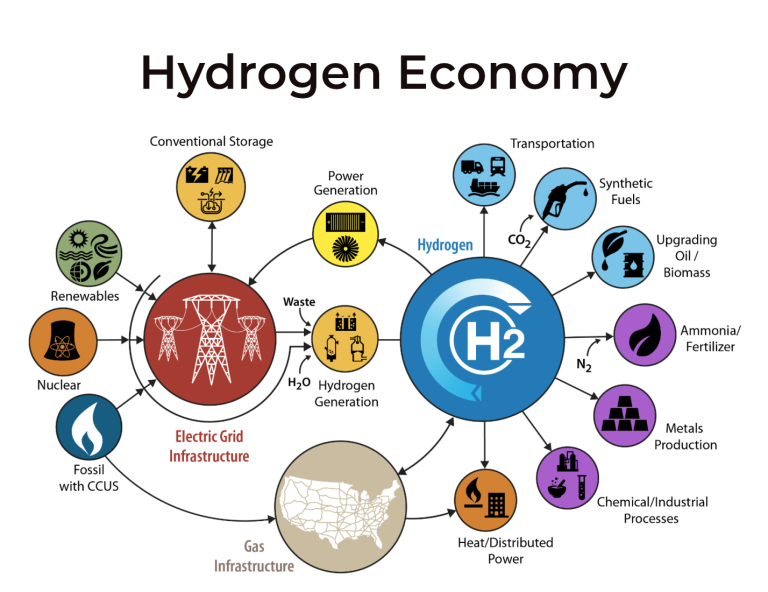
Several sectors are notoriously difficult to electrify:
Steel production
The steel industry accounts for approximately 7-9% of global CO₂ emissions. Traditional steelmaking relies on coking coal. Hydrogen-based direct reduced iron (DRI) technology could substantially reduce these emissions by replacing coal as the reducing agent. IEA
Chemicals and fertilizers
Hydrogen is already a core feedstock for ammonia production. Replacing fossil-based hydrogen with low-carbon alternatives could significantly reduce emissions without requiring major changes to industrial processes. Green Gubre
Shipping and aviation
Long-distance transport presents unique challenges because batteries often lack the energy density required for large vessels and aircraft. Hydrogen-derived fuels such as ammonia, methanol, and synthetic e-fuels are increasingly being explored as alternatives. EHI
Seasonal energy storage
Hydrogen can store renewable electricity over long periods. Unlike batteries, which are typically optimized for short-duration storage, hydrogen may help address seasonal imbalances in electricity systems dominated by wind and solar generation.
Conclusion
While hydrogen’s potential is clear in sectors such as steel, chemicals, and long-distance transport, major questions remain about costs, infrastructure, and real-world deployment. These challenges will determine whether hydrogen can move beyond promising pilot projects and become a cornerstone of the energy transition.