
Europe has set stricter air-quality standards for 2030. But cleaner air will require more than new limits: buildings must become more efficient, heating systems must be modernised, and households need access to affordable solutions. How does the EU intend to turn its environmental targets into practical improvements?
In the previous article, we examined the health impacts of winter air pollution and the contribution of residential heating. This second part focuses on the policies, investment programmes and financial instruments designed to address the problem.
Why heating modernisation matters
Heating represents a major share of household energy demand. According to the European Environment Agency (EEA), space heating accounted for 62.5% of final energy consumption in EU residential buildings in 2023, with more than half supplied by fossil energy.
Air pollution is another concern. A 2025 study by the European Commission’s Joint Research Centre found that residential heating accounted for 85% of PM₂.₅ emissions from the heating and cooling sector.
This does not mean households generate 85% of all European particulate pollution. The figure refers specifically to emissions within the heating and cooling sector. The distinction matters because heating policies address only one part of Europe’s overall air-quality challenge. European Commission
Renovating buildings: The EPBD Action Plan
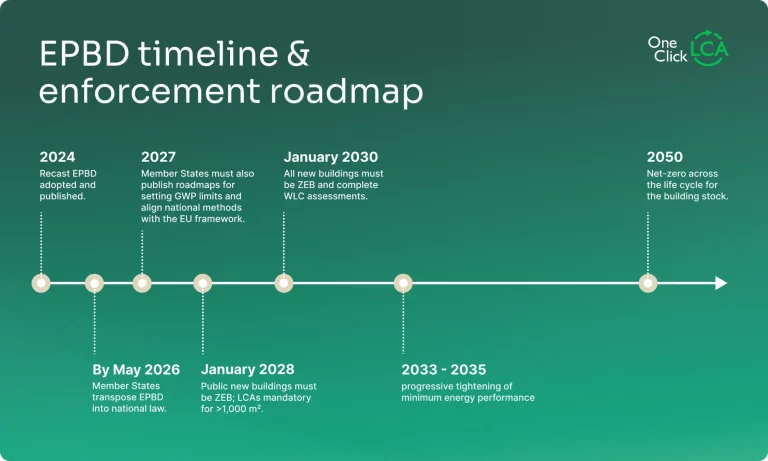
The revised Energy Performance of Buildings Directive (EU 2024/1275) provides the framework for improving Europe’s building stock. For residential buildings, Member States must reduce average primary energy use by at least 16% by 2030 and 20–22% by 2035, compared with 2020.
Source: OneClick
At least 55% of the required reduction must come from renovating the worst-performing residential buildings.
National building renovation plans must set out policies, financing needs, implementation measures and milestones. The deadline for final plans is 31 December 2026.
In practice, measures may include insulation, window replacement, heating-system upgrades and improved building controls. European Commission
Reducing heating demand can lower energy bills and emissions, although local air-quality benefits depend on which fuels and technologies are replaced.
Financial support: the Social Climate Fund
Modernising buildings can require substantial upfront investment, especially for low-income households.
The Social Climate Fund is designed to help address this challenge. For 2026–2032, it is expected to mobilise at least €86.7 billion, including up to €65 billion in EU funding and mandatory national contributions.
Eligible measures can include building renovation, cleaner heating and cooling, renewable energy integration and temporary direct income support.
However, the fund also covers transport-related measures. Its entire budget is not reserved for heating or building upgrades. Member States must prepare Social Climate Plans setting out eligible beneficiaries, investments and milestones. The actual availability of support will therefore depend on national programmes and their implementation.
Changing incentives for heating systems
From 1 January 2025, the EPBD generally prohibits financial incentives for installing new stand-alone boilers powered by fossil fuels, subject to specified exceptions. This is not a blanket EU ban on using existing gas or oil boilers.
Instead, it changes the direction of public financial support towards energy efficiency and lower-emission heating. European Commission
Heat pumps, efficient district heating and other solutions may benefit from national support schemes, depending on local rules and technical conditions.
Local air-quality action plans
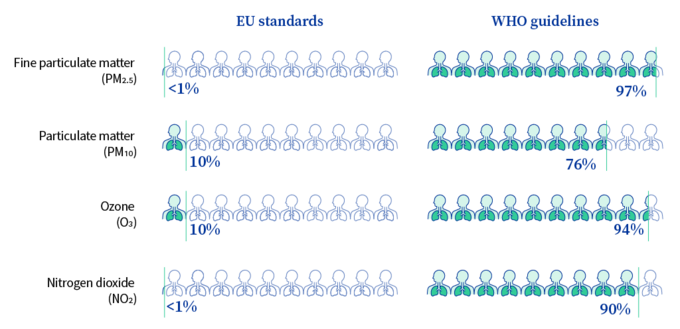
The revised Ambient Air Quality Directive (EU 2024/2881) requires an annual PM₂.₅ limit of 10 µg/m³ from 2030, compared with the existing 25 µg/m³ standard.
Where applicable air-quality limits are exceeded, Member States must establish plans containing measures to restore compliance within the required timeframe.
Source: REHVA
Depending on local pollution sources, these may involve residential heating, traffic restrictions, industrial controls or other interventions. The EU establishes the legal framework, but the practical measures are largely developed and implemented nationally and locally.
Is the funding sufficient?
Financing remains a major challenge. According to the European Commission’s 2026 energy-efficiency financing assessment, combined EU and national public funding of approximately €53 billion annually covers only around 15% of estimated annual energy-efficiency investment needs of €370 billion.
The Commission identifies a substantial financing gap, making private investment, affordable loans and effective support programmes important components of implementation. eur-Lex
Financial barriers are not the only obstacles. Skilled installers, suitable equipment, electricity-network capacity and administrative procedures also influence renovation rates.
Conclusion
Europe’s approach to cleaner winter heating combines stricter air-quality limits, building renovation requirements, changes to heating incentives and targeted financial support.
The framework is increasingly detailed, but its results will depend on national implementation, household affordability and the actual reduction of pollutant emissions.
The key question is no longer simply whether cleaner heating technologies exist. It is whether Europe can make them accessible at sufficient scale while maintaining reliable and affordable energy.
Key Takeaways
- Space heating represented 62.5% of EU residential energy use in 2023.
- Residential heating generated 85% of PM₂.₅ emissions within the heating and cooling sector, according to the JRC.
- EU countries must reduce average residential primary energy use by 16% by 2030.
- The Social Climate Fund is designed to mobilise at least €86.7 billion during 2026-2032.
- Financial incentives for new stand-alone fossil-fuel boilers have generally been restricted since 2025.
- The new annual EU PM₂.₅ limit will be 10 µg/m³ from 2030.
- Implementation and financing will determine how much these measures improve air quality.