

Choosing a heating system has become one of the most important decisions for homeowners and businesses aiming to reduce energy costs and carbon emissions. Across Europe, heat pumps are gaining attention as part of the transition to cleaner heating, while modern condensing gas boilers remain a widely used and reliable technology. Rather than asking which solution is universally “better,” the more relevant question is which technology performs best under different technical, economic and environmental conditions.
The debate is closely linked to the European Union’s Fit for 55 package, which aims to reduce greenhouse gas emissions by at least 55% by 2030. Since heating buildings accounts for a significant share of Europe’s energy consumption and emissions, improving heating efficiency has become a central element of EU climate policy.
Energy efficiency
One of the biggest differences between the two technologies is efficiency.
Modern condensing gas boilers typically convert 90-95% of the energy contained in natural gas into usable heat. Heat pumps operate differently: instead of generating heat through combustion, they transfer heat from the surrounding air, ground or water. Nexus
According to the International Energy Agency (IEA), today’s heat pumps are generally three to five times more energy efficient than gas boilers. Their typical Coefficient of Performance (COP) ranges between 3 and 5, meaning they produce three to five units of heat for every unit of electricity consumed. IEA
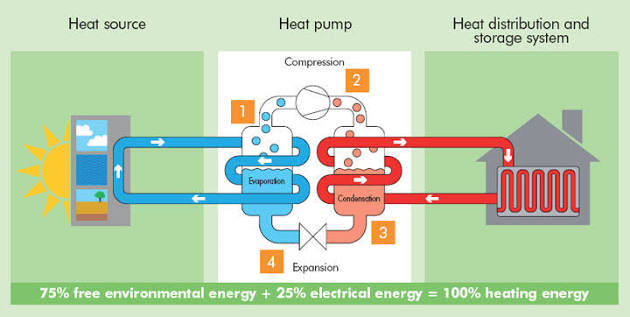
Source: Pure Energy
Carbon emissions
The environmental performance of both systems depends largely on the energy source.
A gas boiler emits carbon dioxide directly through fuel combustion. Heat pumps produce no on-site emissions, but their overall carbon footprint depends on how electricity is generated.
As Europe’s electricity mix becomes increasingly renewable, the emissions associated with heat pumps continue to decline. This trend aligns with the objectives of the Fit for 55 package, which combines building renovation, renewable electricity expansion and cleaner heating technologies to reduce emissions from the building sector. eurostat
Running costs
Operating costs vary considerably between countries because they depend on electricity prices, natural gas prices, climate conditions and building insulation.
Although heat pumps consume electricity, their much higher efficiency often compensates for higher electricity prices. The IEA notes that heat pumps can reduce household heating costs in many markets, particularly where electricity prices increasingly reflect renewable generation and where buildings have good thermal performance.
However, in regions with relatively expensive electricity or poorly insulated buildings, highly efficient gas boilers may remain economically competitive in the short term. Heat pumps watch
Installation costs
Heat pumps generally require a higher upfront investment than gas boilers. Installation costs may also include upgrades to radiators, underfloor heating or electrical systems.
Gas boilers usually have lower installation costs, particularly when replacing an existing boiler connected to the gas network.
However, lifecycle costs increasingly depend on future energy prices, maintenance requirements and climate policies such as the revised Energy Performance of Buildings Directive and the upcoming ETS2 carbon pricing system. Marshall heat
Which buildings benefit most?
Heat pumps perform particularly well in:
- well-insulated buildings
- new residential developments
- properties with underfloor heating
- buildings equipped with rooftop solar PV
Gas boilers may still be a practical solution for:
- older buildings with high heating demand
- properties where major renovation is not currently feasible
- locations without sufficient electrical capacity Britishgas Mycond
Importantly, recent IEA analysis indicates that even many poorly insulated homes can achieve significant energy savings after switching from modern gas boilers to heat pumps, although combining heat pumps with building insulation delivers the greatest benefits.
The European outlook
Heat pump adoption continues to grow across Europe. According to the IEA, European heat pump sales increased by 11% in 2025, with Germany recording a 55% increase in first-half sales. For the first time, heat pumps outsold gas boilers in the German market. Jan Rosenow
This trend reflects broader European efforts to improve energy security, reduce fossil fuel dependence and achieve the objectives of the Fit for 55 package.
Conclusion
Neither technology represents a universal solution.
Gas boilers remain a mature, relatively affordable heating technology with well-established infrastructure. Heat pumps, however, offer substantially higher energy efficiency and increasingly lower lifecycle emissions as Europe’s electricity system continues to decarbonize.
For homeowners and businesses, the optimal choice depends on building characteristics, local energy prices, available infrastructure and long-term investment plans. From a policy perspective, the Fit for 55 package seeks not to mandate a single technology, but to create conditions that gradually encourage lower-carbon heating solutions while improving the overall energy performance of Europe’s building stock.