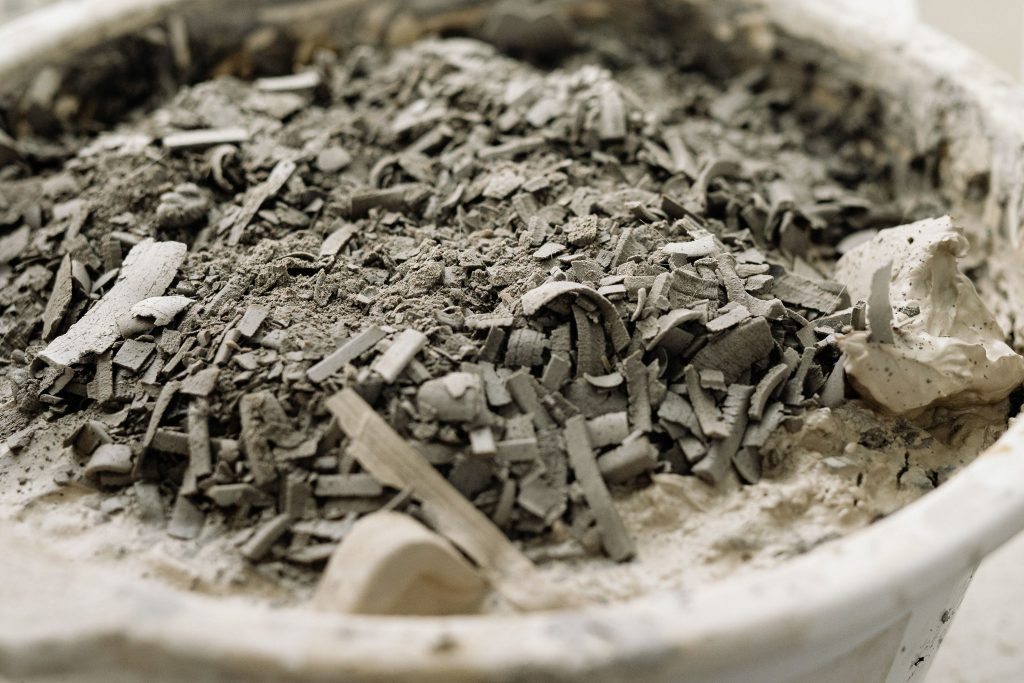
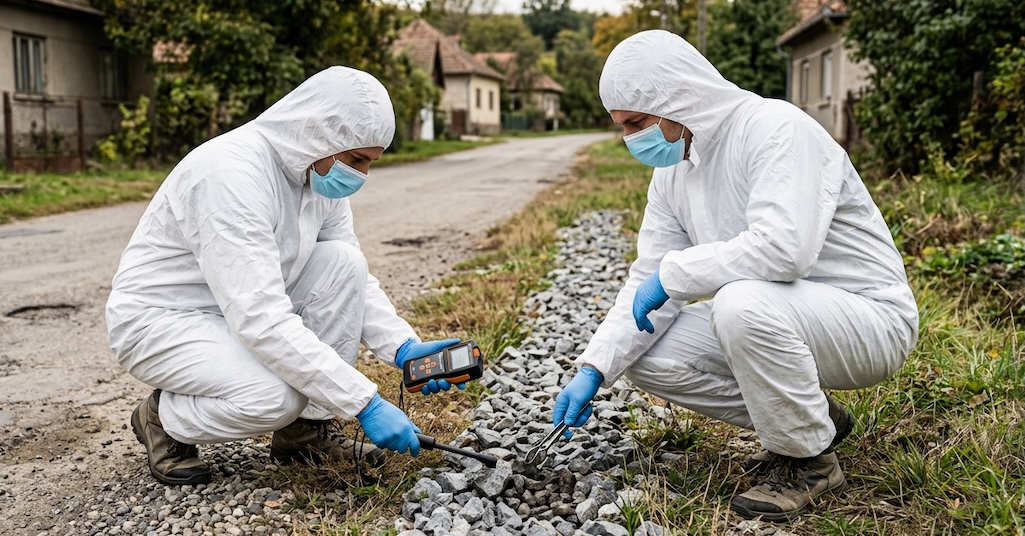
Asbestos-containing rock from quarries in Austria’s Burgenland region has ended up in roads, car parks and public spaces across eastern Austria and western Hungary. Greenpeace has also raised concerns about 22 locations near schools and kindergartens in Austria. Samples from two sites reportedly tested positive for asbestos, while the others remain suspected cases. ORF
As examined in the first part of this series, the material has travelled through construction supply chains and become part of infrastructure across the region.
Now comes a difficult question: who is responsible for making these places safe, removing contaminated material where necessary and paying the bill?
The potential costs are enormous. Greenpeace Austria estimates that disposal and remediation could cost at least €1.6 billion, primarily based on affected material in Austria. The calculation excludes possible health costs and is not an official government assessment.
In Hungary, authorities initially estimated that removing 84,000 tonnes of asbestos-containing gravel in Szombathely could cost around €10 million net. Hungary called on Austria to assume financial responsibility, while Austria said the question required legal examination. By October 2026, Szombathely had begun covering affected roads to reduce the risk of airborne asbestos fibres rather than immediately excavating the material. ORF | Telex
Szombathely is just one example of a regional problem whose financial consequences could last for decades.
The Polluter Pays Principle and its limits
The Polluter Pays Principle is embedded in EU environmental policy: those responsible for pollution should pay to prevent and clean it up, rather than leaving the costs to society.
The EU’s Environmental Liability Directive (2004/35/EC) helps enforce this principle. In some cases, companies can be required to pay even if they did not act negligently. But authorities must still show that the company’s activities caused the environmental damage.
That could prove difficult in the asbestos case. Who supplied the material? Where was it used? Which laws applied at the time? And can the contamination be traced back to a particular company decades later?
The Tisza cyanide disaster: a warning from 2000
On 30 January 2000, a tailings dam at the Aurul gold-processing operation near Baia Mare, Romania, failed, releasing approximately 100,000 cubic metres of cyanide-contaminated wastewater and sludge into the river system.
The pollution travelled through the Someș (Szamos) and Tisza rivers towards the Danube. At Satu Mare, cyanide concentrations reached 7.8 mg per litre, compared with the 0.01 mg/litre surface-water limit cited in a contemporary European Commission report.
The ecological consequences were severe. An estimated 1,240 tonnes of fish were killed in Hungary, while aquatic ecosystems suffered extensive damage and economic losses affected fisheries and other activities dependent on the river. International Task Force report
Hungary sought compensation.
The Hungarian state announced a HUF 29.3 billion compensation claim, covering ecological damage and rehabilitation costs. After attempts to reach an out-of-court settlement failed, Hungary filed a lawsuit against Aurul in 2001. Index
The proceedings continued against Aurul’s successor, Transgold S.A.
In May 2006, the Budapest Metropolitan Court issued an interlocutory judgment finding Transgold responsible for the disaster. However, the ruling did not establish a final damages award, and the company announced it would appeal. Contemporary reporting
But judicial recognition of responsibility did not translate into compensation.
Transgold entered insolvency proceedings in Romania. A Romanian court rejected Hungary’s attempt to be recognised as a creditor after the Hungarian state failed to secure a final damages judgment. Contemporary reporting
Transgold was eventually liquidated without a legal successor. In 2009, the Hungarian compensation proceedings were terminated because there was no longer a defendant against which to pursue the claim. Hungary did not recover the compensation sought through the lawsuit. Contemporary account
The Tisza disaster predates the Environmental Liability Directive’s application date and is not a direct precedent under that legislation. Nevertheless, it illustrates a fundamental weakness of environmental liability: establishing responsibility does not guarantee payment when the responsible company becomes insolvent or disappears.
Environmental damage can outlive the company that caused it.
When the polluter does pay
Other disasters have produced different outcomes.
After the Erika oil tanker sank off the French coast in 1999, the French Court of Cassation confirmed Total’s responsibility in 2012. The company received a €375,000 criminal fine, while approximately €200 million in civil compensation was awarded in the case.
The judgment also helped establish recognition of ecological damage in French law: harm to the environment itself, beyond direct financial losses suffered by individuals or businesses. French Ministry of Justice
The Erika case is not directly comparable to asbestos contamination in Austria and Hungary. Different laws, pollutants and operators were involved.
But the contrast with Tisza is instructive. Environmental damage can result in substantial financial liability when responsibility is established and enforced against parties capable of paying.
The billion-euro question
The full scale of the asbestos problem remains uncertain.
Greenpeace’s €1.6 billion estimate assumes that approximately 26 million tonnes of asbestos-containing rock were extracted from affected Austrian quarries since 1990, with around 20 million tonnes potentially requiring disposal over time.
The calculation assumes disposal costs of just €50 per tonne, roughly half the market price Greenpeace cited before the scandal. The organisation says such low costs would depend on developing new, suitable disposal facilities. Without them, the eventual bill could be substantially higher. Greenpeace Austria
Actual expenditure will depend on how much material is affected, where it is located and what measures authorities require.
Complete removal may not be necessary everywhere. Depending on the risks and applicable rules, contaminated material could be contained or covered. But that does not eliminate future costs. Roads containing asbestos-bearing aggregate may still require special handling during repairs, reconstruction or demolition.
Costs could also extend beyond environmental cleanup. Compensation for personal injury, property damage or economic losses generally fall under national law rather than the EU Environmental Liability Directive.
The financial questions therefore extend beyond immediate remediation.
Who is legally responsible? Quarry operators, suppliers, construction companies and public authorities may face different obligations depending on their roles and the applicable law.
Who pays for immediate protective measures? Governments may have to act to protect public health before liability disputes are resolved.
And who can actually pay? Even where liability is established, recovery may depend on company finances, insurance coverage and insolvency arrangements.
Austria and Hungary now face questions that could take years to resolve. Can contaminated material be traced through decades of supply chains? Which operators can be held responsible? Which obligations arise under EU law, which depend on national legislation, and which costs might ultimately remain with the public?
The Polluter Pays Principle provides a clear starting point: those responsible for pollution should bear its costs. But as past environmental disasters show, proving responsibility and recovering the money are two very different things.
The asbestos may have been extracted years ago. Its consequences could last much longer.
The question of who pays for them is only beginning.