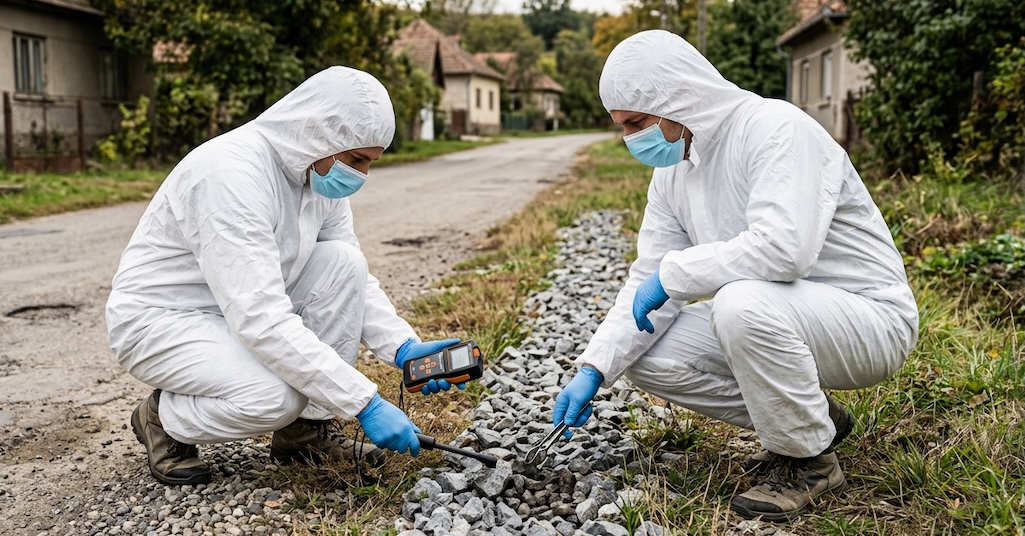

A wildfire does not turn back at a national border. A flash flood does not stop at a checkpoint, and underground aquifers do not follow the lines drawn on political maps. As Europe’s climate changes, these simple facts are becoming increasingly relevant for environmental policy.
Europe is the fastest-warming continent, according to the European Environment Agency (EEA), and the risks associated with rising temperatures are already affecting water resources, ecosystems, infrastructure, food and energy security and human health. The EEA’s first European Climate Risk Assessment identified 36 major climate risks, several of which have already reached critical levels. EEA
Recent observations illustrate the scale of the challenge. Copernicus data show that 2024 was Europe’s warmest year on record, with temperatures 2.92°C above the estimated 1850-1900 level. Copernicus Climate Change Service In the same year, 30% of Europe’s river network exceeded the “high” flood threshold and 12% exceeded the “severe” threshold, the most widespread flooding recorded since 2013. European State of the Climate
The financial consequences are also measurable. According to the EEA, weather- and climate-related extremes caused an estimated €822 billion in economic losses in the EU between 1980 and 2024. A quarter of that total occurred in just the four years from 2021 to 2024. Floods accounted for 47% of the losses.
Interreg: cooperation across political borders
One existing European mechanism is Interreg, the EU’s territorial cooperation framework. It supports countries and regions working together on challenges ranging from economic development and transport to environmental protection, water management and climate adaptation. For 2021-2027, Interreg has been allocated €8.05 billion from the European Regional Development Fund, with 72.2% assigned to land and maritime cross-border cooperation. Climate Adapt European Commission
Climate-related cooperation is already taking place within this framework. The Danube-ADAPT project, for example, brings together organisations from ten countries to harmonise climate data and support evidence-based adaptation policy across the Danube Region, an area home to around 115 million people. Interreg Danube Region
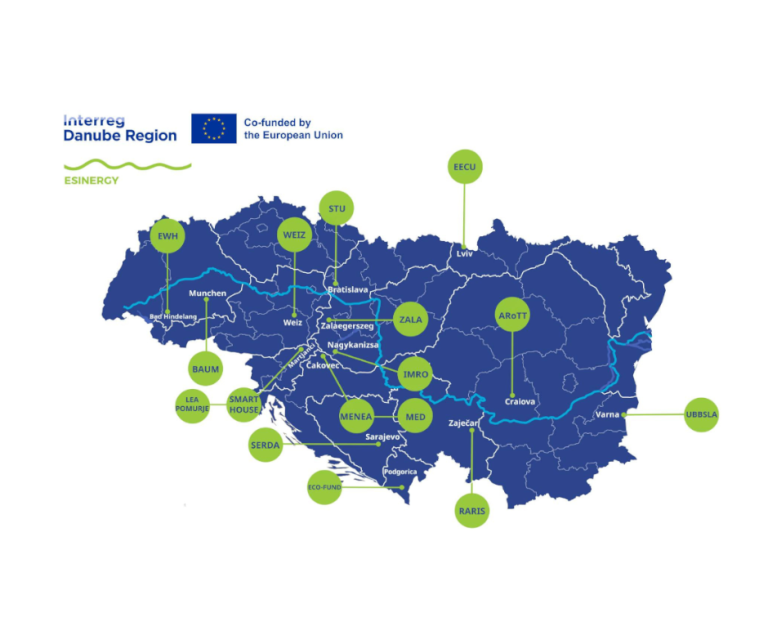
Source: Interreg Danube Region
Other projects address more specific risks. RESTORIVER focuses on restoring water retention capacity along the Danube and its tributaries to improve resilience to droughts, floods and heatwaves. WILDFIRE CE, involving nine partners in five countries, is developing shared methods, maps and action plans for assessing and managing wildfire risks across borders. Interreg Central Europe
The same principle applies to urban water. The MAURICE project connected partners in six countries and tested solutions responding to drought, flooding and declining groundwater resources. Meanwhile, Climate_CRICES is developing shared climate-data tools for risks including heat, drought, water shortages, floods and biodiversity loss.
From individual projects to wider climate resilience
These examples demonstrate what cross-border cooperation can provide: common datasets, compatible monitoring systems, joint risk assessments, shared planning and coordinated emergency preparedness. The Danube Region Programme itself explicitly supports joint monitoring, forecasting and warning systems for floods, droughts, wildfires and other transboundary environmental risks. Interreg Danube Region
This also complements the EU’s broader climate framework. The Fit for 55 legislation is designed to reduce EU net greenhouse-gas emissions by at least 55% by 2030 compared with 1990, on the path towards climate neutrality by 2050. European Commission While Fit for 55 primarily addresses emissions reduction, climate mitigation and adaptation are increasingly interconnected: reducing future warming and preparing European regions for impacts that can no longer be avoided are parallel parts of climate resilience.
Interreg therefore offers an established institutional structure for one of adaptation policy’s basic geographical realities. Rivers, forests, aquifers, droughts and extreme weather systems frequently extend across several countries. Managing them through shared data, compatible planning and coordinated responses reflects the physical scale on which these systems actually function. EUcalls
The existing projects show that such cooperation is technically and institutionally possible. The question for Europe’s next phase of climate policy is increasingly one of scale: how widely these cross-border approaches can be applied as climate risks continue to grow. ScienceDirect
Conclusion
Europe’s climate risks increasingly operate across borders, while many of the institutions responsible for managing them remain primarily national or regional. Floods, droughts, wildfires, river basins and groundwater systems illustrate why climate adaptation can require cooperation beyond individual jurisdictions.
Existing Interreg projects show that cross-border climate cooperation can take practical forms: shared monitoring systems, comparable climate data, joint risk assessments, coordinated water management and common preparedness strategies. They also provide an existing EU framework through which authorities, researchers and other organisations in neighbouring countries can work on the same environmental system rather than treating its different parts separately.
This approach complements the EU’s wider climate agenda. While Fit for 55 targets at least a 55% reduction in net greenhouse-gas emissions by 2030, adaptation policies address the climate impacts that Europe is already experiencing or is expected to face. Together, mitigation and adaptation form two distinct but connected elements of European climate policy.
As climate risks become more frequent and interconnected, the experience accumulated through Interreg provides evidence for how cross-border adaptation can work in practice. The central issue for the coming years will therefore not only be the development of new solutions, but also whether successful forms of cooperation can be expanded, connected and incorporated more systematically into Europe’s climate resilience efforts.